


Why (The Core)
This is your gut feeling, your purpose, your reason for existing. It's not about making money or getting ahead - that's just the result. Your why is deeper. Maybe it's "I want my kids to know they can overcome anything" or "I believe hard work and integrity still matter" or "I want to show other men it's okay to struggle and still be strong."
“Then one of the twelve, named Judas Iscariot, went to the chief priests 15and said, “What are you willing to give me to betray Him to you?” And they weighed out thirty pieces of silver to him. 16From then on he began looking for a good opportunity to betray Jesus.”
Matthew 26: 14–16
It was an exciting day yesterday. My good friend, as well as diamond, gold, silver and precious stones expert, Anthony Dimaggio sent me the kilogram of silver I had purchased from him. I opened the insured FedEx package and unwrapped the precious 35+ ounces of metal.
If you have never held physical silver or gold in your hands, you are missing something special and unique. It feels like real wealth. Unlike the paper dollars we fold up, silver and gold are solid, has real value and stands the test of time.
What do I mean by that? Well, an ounce of gold in 1970 was worth approximately $40/ounce. In 1970, $40 held significant purchasing power, equivalent to roughly $340 in 2026 dollars. This amount could cover a substantial grocery haul, multiple high-quality clothing items, or a few weeks’ worth of gasoline. It was roughly equivalent to one-tenth of the average monthly household income, making it a meaningful amount of spending money.
But, that same $40 in 1970 also bought an ounce of gold. That same ounce of gold is now worth $4,600 and $40 in paper dollars won’t even fill your car one time with gasoline. That’s what I mean by real wealth. Holding gold and silver your hands is special because it holds value over time.
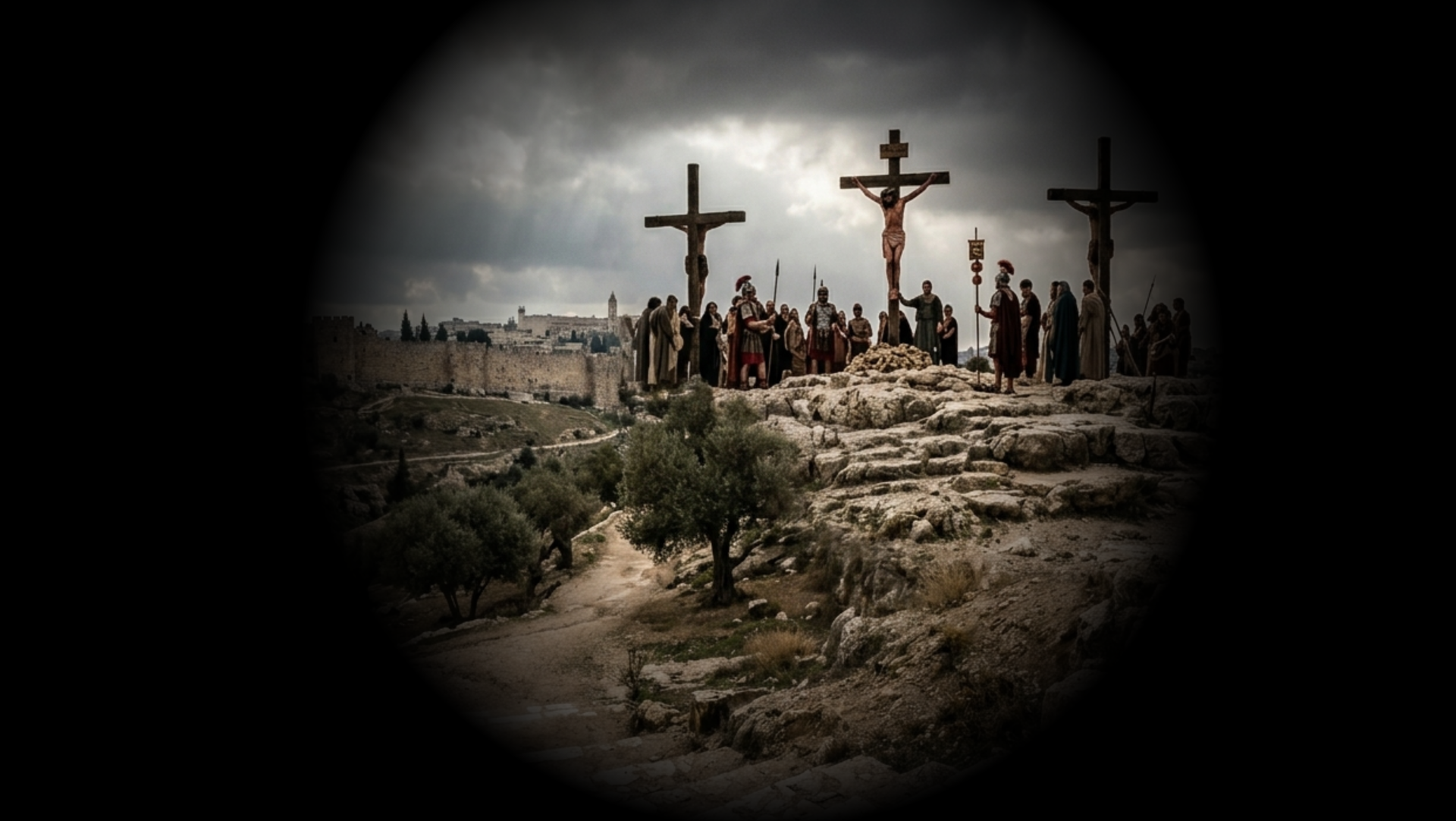
It’s so special in fact, that 2000 years ago, Judas Iscariot betrayed the LORD and savior Jesus Christ for 30 pieces of silver to experience that feeling.
As I just stated, it wasn’t a massive fortune ; it was a relatively modest amount. In the Old Testament, 30 pieces of silver was also the price of a slave (Exodus 21:32), which adds weight to the betrayal.
In other words, it wasn’t just betrayal…it was cheap betrayal. Judas didn’t sell Jesus for a kingdom, power, or real wealth. He sold Him for something temporary, transactional, and ultimately worthless.
It’s easy to look at Judas and think, “What a fool! I’d never do that.” Really?
The real question is:
“What do we trade truth for?” Or more directly, “What have you traded truth for in the past?”
- Convenience?
- Comfort?
- Approval?
- Avoiding conflict?
- Money?
- Pleasure?
- Betrayal rarely looks dramatic in the moment. It looks like a small compromise. A quiet moment. A rationalization. A “just this once.”
Judas didn’t just betray Jesus — he showed how little it can cost a man to trade what matters most.
So, ask yourself, “What’s Your Price?”
For Judas it was for 30 pieces of silver. What about you? What’s your price?
Consider just how little it took for the betrayal. We like to distance ourselves from Judas. So why do people betray?
Not because they’re evil villains.
Because they’re:
- Disappointed
- • Offended
- • Impatient
- • Disillusioned
- • Hungry, Angry, Lonely, Tired, Scared. “HALTS”
- For three years, Judas followed Jesus. Witnessing firsthand healings, miracles including raising people from the dead in Lazarus. But somewhere along the way, Jesus stopped being who Judas wanted Him to be.
Judas became disillusioned and deceived. So instead of adjusting his expectations and reevaluating the situation…he adjusted his loyalty.
That’s the danger. When your perceived reality and expectations don’t match your beliefs, you have two choices:
Humble yourself… or justify yourself.
One leads to growth. The other leads to betrayal.
So, what leads up to it? Remember, it’s never just one moment.