


Why (The Core)
This is your gut feeling, your purpose, your reason for existing. It's not about making money or getting ahead - that's just the result. Your why is deeper. Maybe it's "I want my kids to know they can overcome anything" or "I believe hard work and integrity still matter" or "I want to show other men it's okay to struggle and still be strong."
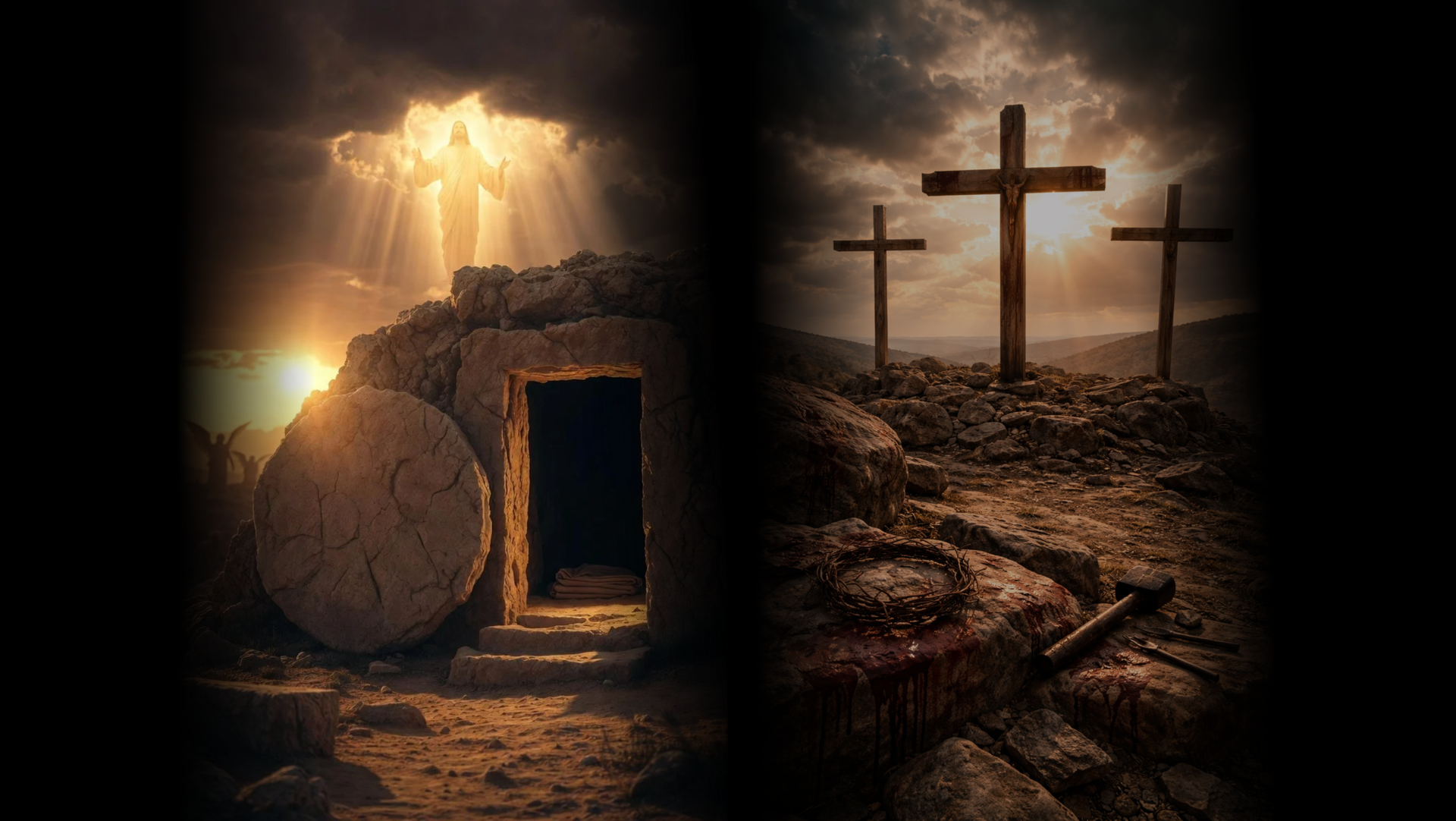
Easter is the most significant Christian holiday, celebrating the resurrection of Jesus Christ
three days after his crucifixion, which represents victory over sin and death. It offers
believers the hope of eternal life, acting as the foundation of Christian faith and a promise
of new beginnings.
Key reasons Easter is considered a "big deal":
• Foundation of Faith: According to Christian belief, if Jesus did not rise from the
dead, their faith would be pointless. It serves as confirmation of all Jesus claimed
during his ministry.
• Promise of Eternal Life: It symbolizes that death is not the end and promises
believers victory over "sin, death, and the Devil," promising future reunion with God
in heaven.
Easter is related to the Jewish holiday of Passover because Jesus' crucifixion and
resurrection occurred during the Passover festival. While they often fall near each other in
March or April, Easter is set as the first Sunday after the first full moon following the vernal
equinox, whereas Passover is tied to the Hebrew lunar calendar.
Key connections and differences include:
• Historical Link: Some believe The Last Supper was a Passover Seder. A Passover
Seder is a traditional ritual feast held on the first two nights of Passover (Pesach) to
retell the story of the Israelites' liberation from Egyptian bondage. However, that is
not the case.
First, very little, if anything, of the rabbinic Seder practices can be read back to the
early part of the first century C.E. Second, Jesus’ Last Supper with his disciples did
not take place on the first night of Passover. There is a real di?erence
between John and the synoptics on this question, and Jesus was tried and
killed before the holiday began. By Seder time, he was buried.
• Calendar Separation: The Council of Nicaea in 325 AD determined that Easter
should not be tied to the exact date of Passover, separating the calendars.
• Timing Variations: Because Passover is based on the Jewish lunar calendar
(starting on Nisan 14 or 15) and Easter is based on a solar-lunar hybrid, they do not
always coincide.
• Symbolism: Both are spring festivals, but Passover celebrates the liberation from
slavery in Egypt, while Easter celebrates the resurrection of Jesus.
For those who want to understand more about Easter, visit churches that hold Holy
Thursday to Easter Sunday services. This is the most holy of all Christian celebrations.
The Easter Bible Story - While Christmas observes the birth of Jesus, Easter remembers
the main Christian event: Christ's su?ering, crucifixion, and resurrection. For Christians,
Easter is the remembrance of Christ's voluntary death and resurrection to save humankind
from sin and death.
Blessed be the God and Father of our Lord Jesus Christ! According to His great mercy, He
has caused us to be born again to a living hope through the resurrection of Jesus Christ
from the dead" (1 Peter 1:3)
Discover the complete Bible story of Easter, including the Last Supper, Judas' Betrayal, the
Crucifixion of Jesus, and Jesus' Resurrection. Read the summary of each and the full
scripture on your own:
Key Events of Holy Week:
1. Palm Sunday: Jesus enters Jerusalem to cheering crowds, riding on a donkey,
fulfilling prophecy.
2. Holy Monday/Tuesday: Jesus cleanses the Temple, cursing the barren fig tree, and
teaches in parables.
3. Spy Wednesday: Judas Iscariot agrees to betray Jesus for 30 pieces of silver.
4. Maundy Thursday: The Last Supper, where Jesus washes his disciples' feet and
initiates the New Covenant, followed by his agony in the Garden of Gethsemane and
betrayal by Judas.
5. Good Friday: Jesus is tried, sentenced, scourged, and crucified at Calvary. He dies
and is buried in a tomb by Joseph of Arimathea.
6. Holy Saturday: Jesus rests in the tomb while his disciples hide in fear and mourn.
7. Easter Sunday: The resurrection. Women visit the tomb, find it empty, and are told
by angels that Jesus has risen, later appearing to his followers
1. The Last Supper
Matthew 26:17-30, Mark 14:12-25, Luke 22:7-23
The story of the Last Supper is an invitation from Jesus to partake of Him, first to His
apostles and to all Christians. This is a summary of the Last Supper Bible story as told in
the books of Matthew, Mark, and Luke below. Read more in-depth Bible verses from the
Scripture below and use the articles and videos to understand the meaning behind this
teachable event in the Bible.
The last supper occurred on Passover's first day, or the Festival of Unleavened Bread. Jesus
sent his disciples to the city to prepare a meal to celebrate Passover. Passover is the
remembrance of Israel being freed from slavery to Egypt, specifically when the angel of
death passed over the homes of the Israelites that had lambs' blood over the doors.
As the disciples reclined and ate dinner with Jesus, he explained that one of the twelve
would soon betray him. One by one the disciplines denied that it would be them, including
Judas who would be the betrayer. Jesus responded that the person who betrays him will
have a terrible fate and that it was Judas.
Jesus prayed and thanked God for the meal. He then broke the bread, shared the wine with
the disciples, and explained to them how the bread was a symbol of his body, broken for
them, and the wine a symbol of his blood which would be poured out for their sins to be
forgiven. This is where the church's tradition of communion comes from.
After the meal, Jesus became like a servant and washed the feet of the disciples. Peter did
not feel right having Jesus wash his feet but Jesus said that He was doing it to be an
example to them. Now the disciples would be able to wash each other's feet, meaning they
could be servants to all.
2. Judas Betrays Jesus
John 18:1-13, Luke 22:1-6, Luke 22:47-54, Matthew 26:47-56, Mark 14:43-50
The Bible Story of Judas betraying Jesus is found in all four gospels. This powerful story is
well-known in Christian theology as one of the most significant events of disloyalty. There
are several explanations as to why Judas betrayed Jesus, including bribery and demonic
possession, that vary among the gospel accounts.
The Gospels imply that Jesus anticipated and permitted Judas's betrayal. One
interpretation is that Jesus allowed the betrayal because it would allow God's plan to be
achieved and another that regardless of the betrayal, Jesus was eventually fated for
crucifixion as part of God's plan.
During the meal of the Last Supper Jesus predicts that "one of you will betray me" referring
to Judas. Judas leaves the supper and goes to the Roman authorities who are looking to
arrest Jesus. He accepts a bribe of 30 silver and agrees to take them to Jesus. Judas knew
that Jesus and the disciples would go to a garden near Jerusalem and led the soldiers there,
stating "Whoever it is I kiss, he is the one; take him into custody, and lead him away under guard.
” Leading the group into the garden, Judas sees Jesus with his disciples and approaches him.
“Greetings, Rabbi!” Judas says, and he kisses Jesus very lightly.
“Fellow, for what purpose are you present?” Jesus responds. (Matthew 26:49, 50) Answering his own
question, Jesus says: “Judas, are you betraying the Son of Man with a kiss?”
As the soldiers move toward Jesus, the apostles recognize what is happening. “Lord,
should we strike with the sword?” they ask. (Luke 22:49) Before Jesus can respond, Peter
uses one of the two apostles' swords and attacks Malchus, a high priest servant, cutting o?
his right ear.
Jesus caresses the ear of Malchus, healing the wound. He then teaches an important
lesson, telling Peter: “Return your sword to its place, for all those who take up the sword
will perish by the sword.” Jesus is willing to be captured, for he explains: “How would the
Scriptures be fulfilled that say it must take place this way?” (Matthew 26:52) This then
leads to the trial and Crucifixion of Christ.
3. Crucifixion of Jesus
Matthew 27:1-54, Mark 15:1-40, Luke 23:1-48, John 19:1-30
The crucifixion of Jesus is recorded in the New Testament books, known as the Gospels -
Matthew, Mark, Luke, and John. This Bible story is the central summary of the saving
Gospel of Jesus. Jesus had prophesied his death in Matthew: "from that time on Jesus
began to explain to his disciples that he must go to Jerusalem and su?er many things at the
hands of the elders, the chief priests and the teachers of the law and that he must be killed
and on the third day be raised to life." Jesus understood that his life would be required as a
sacrifice for the sins of man.
At the height of his ministry and miracles, many Jews came to believe in Jesus as the
Messiah, the Son of God. Jewish leaders feared Jesus because of his growing followers.
With the help of Judas Iscariot, Roman soldiers arrested Jesus, and he was put on trial for
claiming to be the king of the Jews. According to Roman law, the punishment for rebellion
against the king was death by crucifixion.
The Roman governor, Pontius Pilate, was reluctant when it came to the punishment for
Jesus. Pilate could find no wrong in Jesus, yet he wanted to give the people what they
wanted, and that was the death of Jesus. Pilate washed his hands in front of the crowd to
symbolize that he was not taking responsibility for the bloodshed of Jesus and then handed
Jesus over to be beaten and lashed. Jesus had a crown of thorns thrust on his head and
made to carry his cross along the pathway to the hill where he would be crucified. The
location of Jesus' crucifixion is known as Calvary, which is translated from "a place of a
skull."
Crowds had gathered to mourn and watch Jesus' death. Jesus was nailed to the cross
between two criminals, and his sides were pierced by a sword. While Jesus was mocked,
one of the criminals asked him to remember him, and Jesus responded: "Truly, I tell you,
today you will be with me in paradise." Jesus then looked to heaven and asked God to
"forgive them, for they do not know what they do." When taking his last breath, Jesus spoke:
"Father, into your hands I commit my spirit...it is finished."
Extraordinary events marked the death of Jesus. The sky was completely dark for three
hours as Jesus hung on the cross. At the moment of his last breath, the earth shook, the
temple curtain split from top to bottom, and the tombs of saints opened and their bodies
raised from the dead.
The crucifixion of Jesus was a part of God's plan from the very beginning of the birth of
Jesus. The sin of mankind would require a sacrifice. The sinless life of Jesus was lived and
given so that man could receive salvation and eternal life in heaven.
4. Resurrection of Jesus
Matthew 28, Mark 16, Luke 24, John 20
The resurrection of Jesus Christ is the foundation of the Christian faith. Without the
resurrection, the belief in God's saving grace through Jesus is destroyed. When Jesus rose
from the dead, He confirmed his identity as the Son of God and His work of atonement,
redemption, reconciliation, and salvation. The resurrection was a real, literal, physical
raising of Jesus’ body from the dead.
Jesus was arrested, tried, and found guilty of claiming to be a king. His body was hung on a
cross between two thieves. After his death, Jesus’ body was wrapped in linen cloth and
placed in a tomb with a large stone rolled across the opening. On the third day, an early
Sunday morning, Mary Magdalene and another Mary came to the tomb and found it empty.
Sitting on the rolled-away stone was an angel of the Lord who told them not to be afraid
because Jesus had risen. As the women left to tell the disciples, Jesus Christ met them and
showed them his nail-pierced hands.
Both the Old and the New Testaments speak of the truth of Jesus being raised from death -
Jesus testified of his resurrection before he died on the cross, and his disciples witnessed
his body after the resurrection. Below are the Bible verses and Scriptures that both
prophesize the resurrection and testify of its reality after Christ’s death.
You can read the Biblical accounts of Easter on your own. Here are four di?erent tellings of
the story by four di?erent authors written to four di?erent audiences.
Matthew 28, The Gospel of Matthew, likely written between A.D. 50–70 (possibly 60-65), is
traditionally attributed to Matthew (also called Levi), a former tax collector and one of the
12 apostles. It was written for a primarily Jewish Christian audience to prove that Jesus is
the Messiah and King who fulfilled Old Testament prophecies.
Mark 16, The Gospel of Mark, likely written around A.D. 55–70 (often cited as the first
Gospel), was authored by John Mark, an associate of the Apostle Peter, to provide a
concise record of Peter’s eyewitness testimony. The primary audience was Gentile
Christians, likely in Rome, facing persecution under Nero, designed to encourage
endurance through Jesus' example.
Luke 24, The Gospel of Luke, was written by Luke, a Gentile physician and companion of
Paul, likely between A.D. 58 and 65. It is addressed to "Theophilus," likely an influential,
high-ranking Gentile, with a broader audience of Gentile Christians intended to provide an
orderly, reliable account of Jesus' life and ministry.
John 20, The Gospel of John, was written by the Apostle John (son of Zebedee) around A.D.
70–100, most likely from Ephesus in the late 1st century. It addresses a general audience of
early Christians, both Jews and Gentiles, aiming to prove Jesus is the Messiah and Son of
God to secure their faith
What about Lent? The first thing to notice is that lent is not prescribed in the Bible.
It was developed as a practice of the Catholic church centuries ago.
It’s a tradition, not Scripture.
Link to .pdf